
At the end of the day, I like to unwind with my guilty pleasure shows on Hulu. It’s usually my chance to disconnect from the world of education advocacy for a few hours. A few weeks ago, though, education policy followed me to the couch.
During nearly every commercial break, I was greeted by an advertisement from Commonwealth Charter Academy (CCA). After the third or fourth commercial, I found myself doing what any education advocate would do: getting curious about what, exactly, Pennsylvania taxpayers were being asked to fund. Frustrated by the seemingly endless stream of CCA advertisements, I grabbed my phone and scanned the QR code on the screen to see where it would lead.
Unsurprisingly, the QR code led to a webpage packed with marketing claims about the CCA experience. But one stood out from the rest. In the bottom corner of the page, CCA boasts that it provides students with “1,000+ field trips and events per year.” That’s more than three field trips every single day, paid for with Pennsylvania taxpayer dollars.
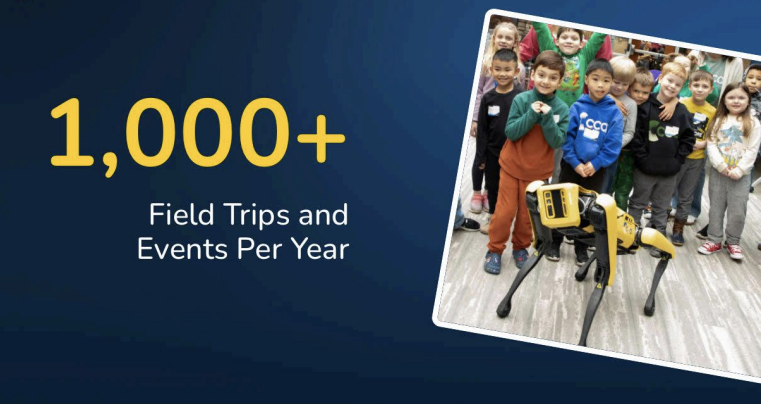
While many traditional public schools are selling candy bars, hosting fundraisers, and stretching already-tight budgets to provide occasional educational field trips for students, CCA advertises more than 1,000 field trips annually.
Digging deeper into the website, I learned that students are eligible to attend up to one school-funded field trip per month. The list of activities includes trips to the Pennsylvania Renaissance Faire, Sky Zone in Lancaster County, Blue Mountain Resort’s Summit Aerial Park, laser tag, rock climbing, bowling, kayaking, and more.
To be honest, many of these activities sound less like educational programming and more like the summer camps my parents paid thousands of dollars to send me to when I was growing up.
At a time when school districts across Pennsylvania are struggling to balance budgets and raising property taxes to pay their bills, it’s fair to ask whether taxpayer dollars intended for education should be funding cyber charter television advertising campaigns and monthly trips to zip lines, trampoline parks, and Renaissance festivals.
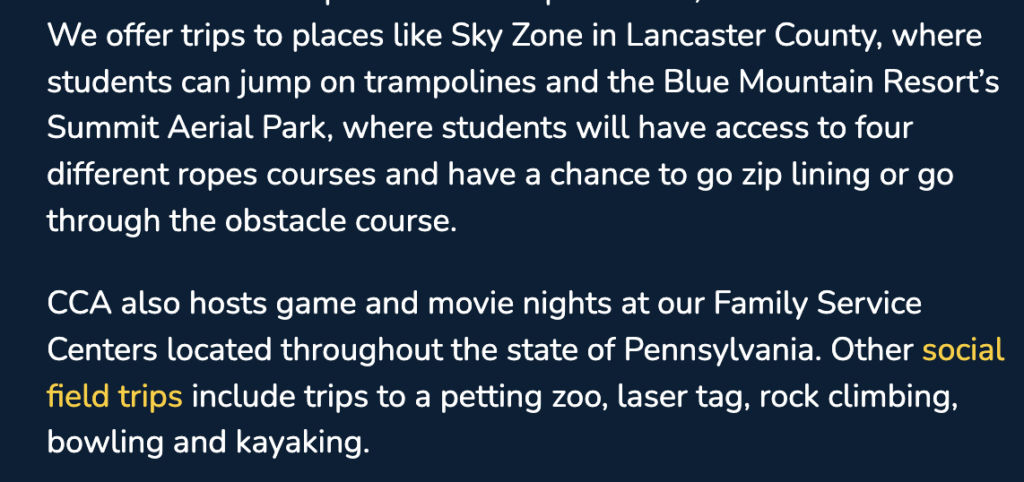
**Screenshot taken directly from CCA’s website
So instead of finishing another episode of mindless television, I decided to file a Right-to-Know request to find out exactly what those “1,000+ field trips per year” are costing Pennsylvania taxpayers. Unfortunately, getting an answer turned out to be far more complicated than asking the question.
CCA denied the request, and we appealed to Pennsylvania’s Office of Open Records. Ultimately, the Office of Open Records sided with CCA, concluding that portions of our request were too broad.
In hindsight, that’s a fair criticism. When you’re trying to uncover the costs associated with more than 1,000 field trips spread across an entire school year, it’s difficult to know exactly which records to request, before seeing any of the records themselves.
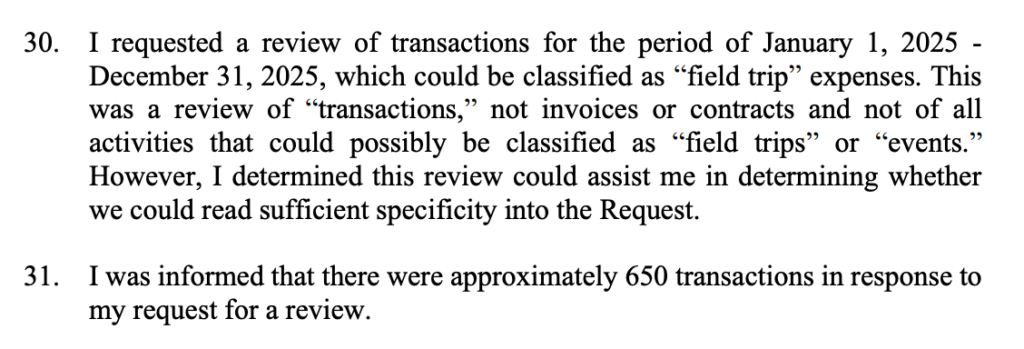
But what stood out to me wasn’t just the denial. During the appeal, CCA acknowledged that responsive records exist and indicated that fulfilling the request could involve reviewing roughly 650 transactions. See the excerpt from their Entry of Appearance.
Think about that for a moment….
A cyber charter school is publicly advertising “1,000+ field trips per year.” There are hundreds of transactions related to those trips. Yet months after I first scanned that QR code from my couch, taxpayers still don’t know how much those field trips cost or what the field trips even were.
That’s not because the information doesn’t exist. It’s because obtaining the information requires navigating a lengthy Right-to-Know process, filing appeals, waiting for decisions, and then starting over with a more narrowly tailored request. So that’s exactly what we’re doing. We’ve gone back to the drawing board and submitted a much more refined Right-to-Know request focused on obtaining the records needed to understand the costs associated with these field trips.
We’ll see what the records show. But regardless of what happens next, this experience raises a larger question: Why should it take months of appeals and procedural back-and-forth for taxpayers to learn how a public cyber charter school is spending their tax dollars?
Because transparency matters, you can read the full Right-to-Know denial by clicking HERE to see exactly what was requested and how the Office of Open Records ruled.
When public schools spend taxpayer money, transparency shouldn’t be this difficult.
Lucas Wolk
Director Of Community Impact
Education Voters of Pennsylvania