
Five years ago, Education Voters of PA did a deep dive into the Race Horse Development Fund (RHDF) when Governor Wolf proposed reallocating this funding to support higher education.
You can find our 2021 report HERE.
Since 2004, a staggering $3.5 billion in slot revenue generated at Pennsylvania casinos has been gifted to the commonwealth’s horse racing industry through the Race Horse Development Trust Fund (RHDTF). The industry continues to receive nearly $200 million annually in subsidies, and at a recent House joint Agriculture and Gaming Committee meeting, industry insiders indicated that they are seeking MORE dollars from gambling revenue in the 2026-2027 state budget.

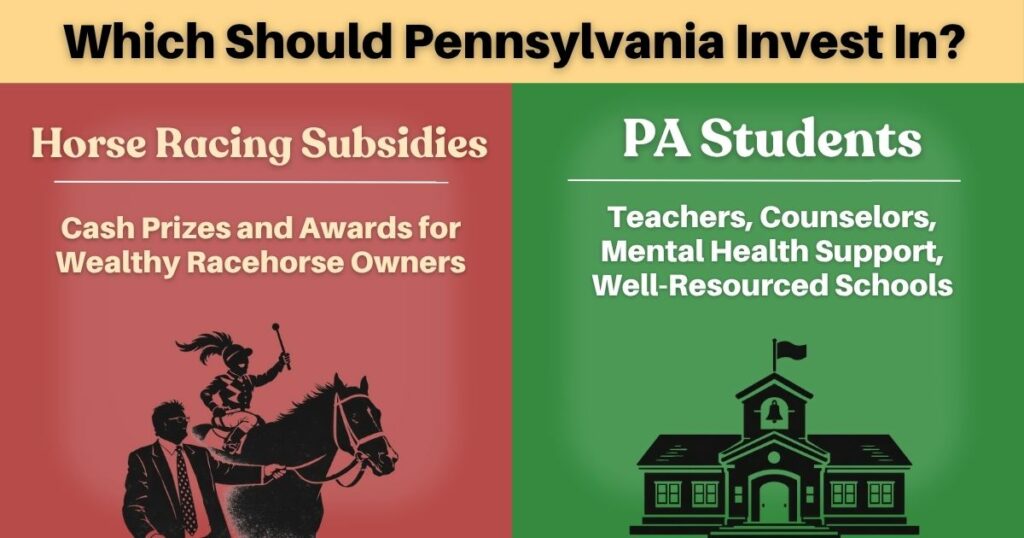
Subsidies to the racing industry are used to pad cash prizes and provide health insurance and pensions for wealthy horse owners, breeders, and trainers. They are also used to fund drug testing for horses and advertising costs for racetrack marketing, among other things. The primary beneficiaries of these dollars are a small number of racing enthusiasts and hobbyists who have profited from an enormous public investment while avoiding public scrutiny.
HORSE RACING IS A CRUEL AND CORRUPT INDUSTRY!
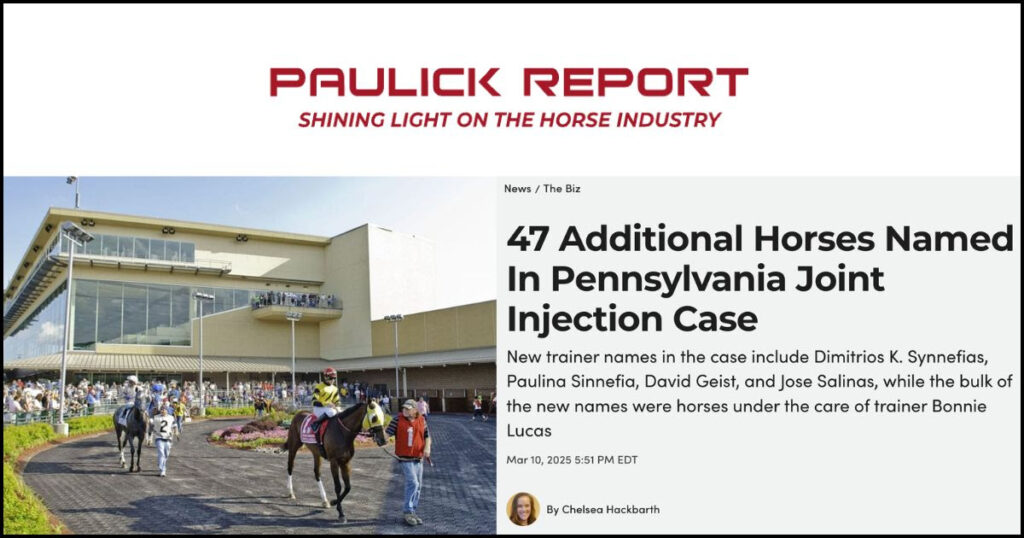
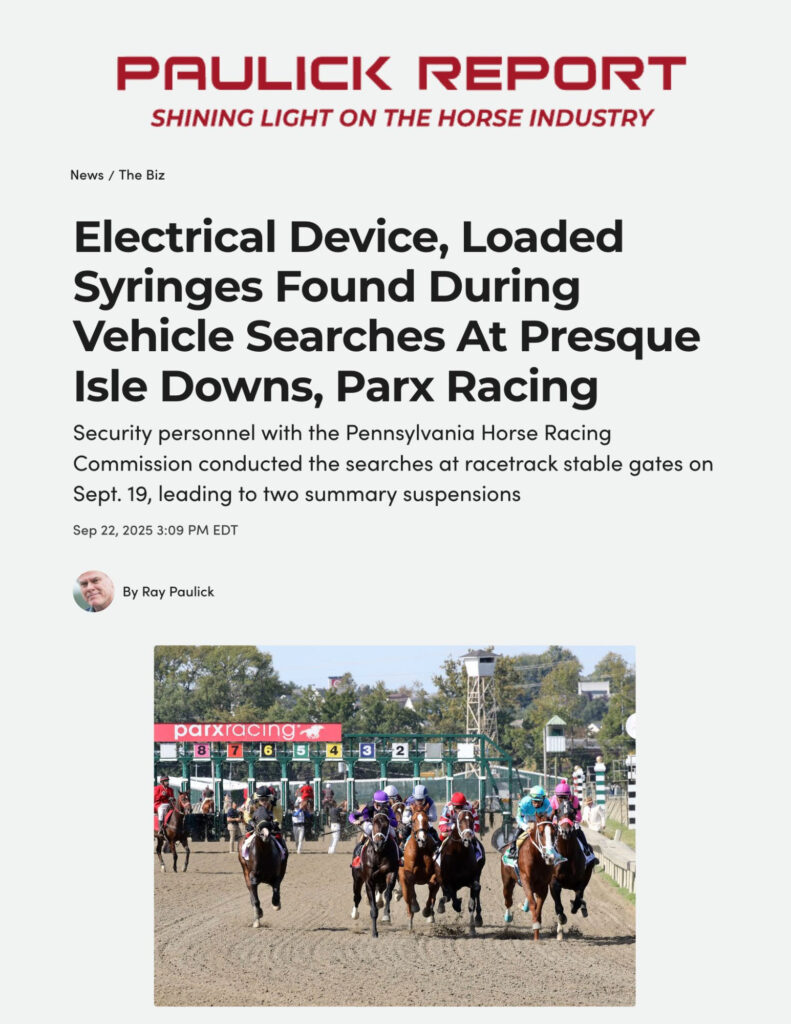
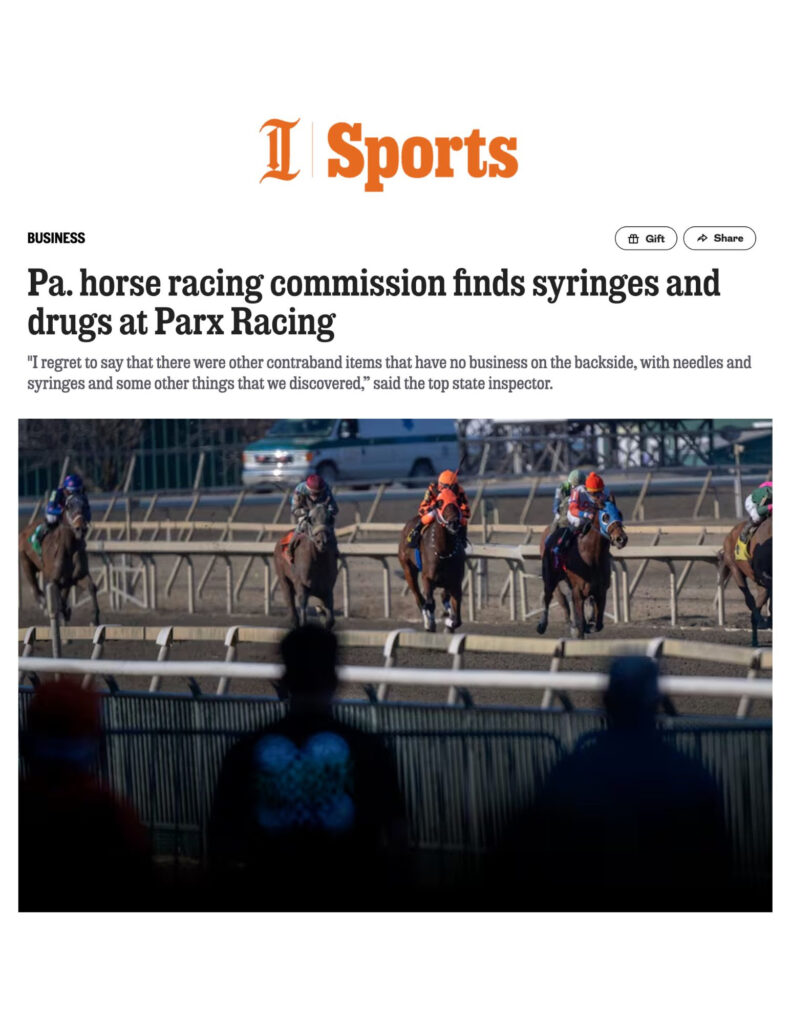
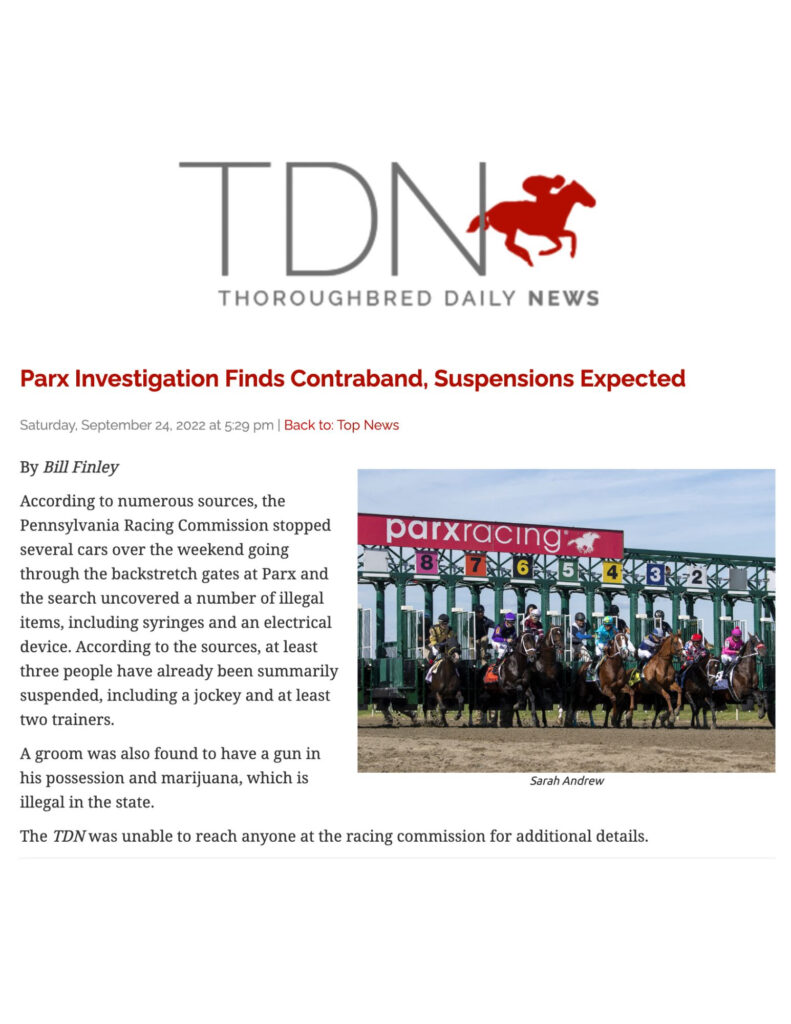
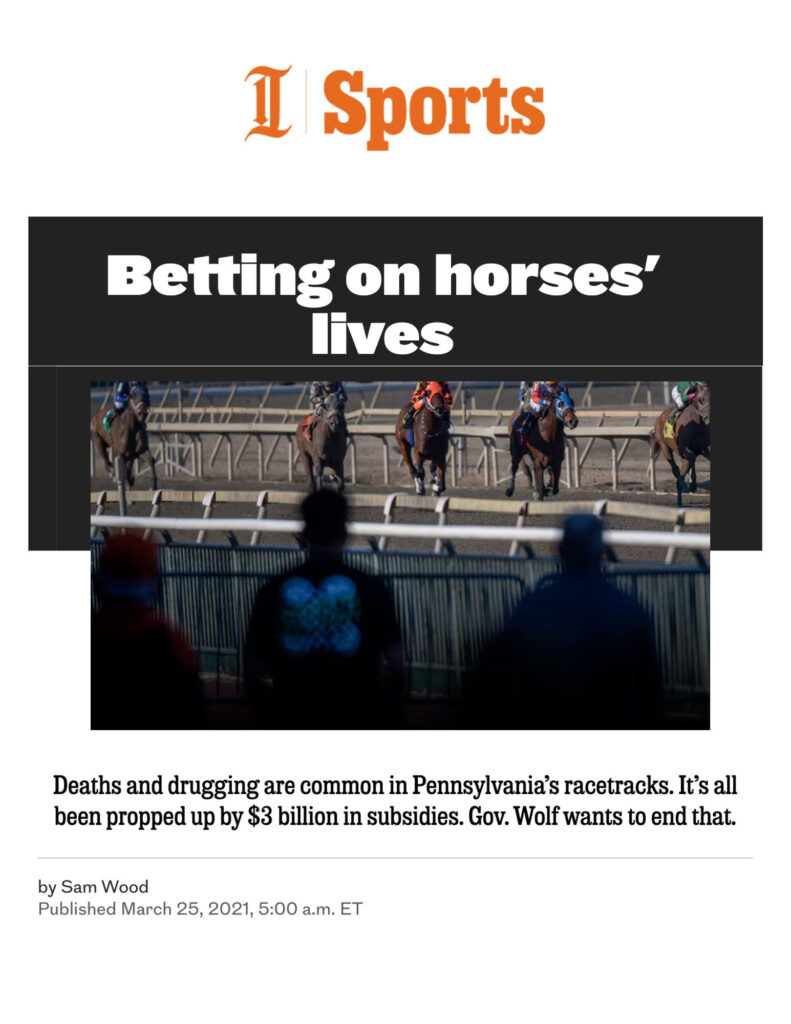
Pennsylvania’s horse racing industry is rife with cruelty, doping, and death. Last year, 66 horses died on PA tracks. The Philadelphia Inquire documented more than 1400 horse deaths on PA tracks from 2010-2021. And trainers and owners at PA racetracks are routinely caught with illegal loaded syringes, dirty needles, and other contraband.
As gambling options have proliferated and public understanding of the cruelty and death in the industry increases, interest in horse racing in Pennsylvania and nationwide has plummeted. After $3.5 billion in subsidies, it is time for the industry to be self-sustaining and face the issues that other businesses have to contend with — changing consumer demand.
When more than half of preschoolers who are eligible for publicly funded, high-quality pre-k in Pennsylvania don’t get to attend, K-12 students in the commonwealth attend public schools that are unconstitutionally underfunded by more than $3.8 billion, and Pennsylvania ranks 47th out of 50 states for investment per capita in higher education, the last thing our state government should be expected to support is lavishing additional funding on subsidizing a luxury industry.
Any proposal for additional funding to subsidize the horse racing industry should be met with a firm denial. Further, it is past time for state lawmakers to eliminate the subsidy for horse racing altogether.
Instead of subsidizing wealthy racehorse owners, we should be putting the hundreds of millions in annual subsidies toward Pennsylvania students. It’s time to start putting the education of children over the hobbies of billionaires.
PS: Please find additional information about the horse racing industry below.
RACE HORSES ARE A SMALL PART OF PENNSYLVANIA’S EQUINE INDUSTRY AND A VERY SMALL PART OF PENNSYLVANIA’S AGRICULTURAL INDUSTRY AS A WHOLE.
A report published by the Penn State Extension in 2023 found that Pennsylvania ranks 8th in the nation for the number of horses. They are divided into three sectors: recreation, competition (showing, jumping, dressage, etc.), and racing. Racing has the least economic impact of these three sectors.
The report found that the recreation sector adds $329 million directly to the economy and supports 8,450 direct jobs. The competition sector adds $279 million directly to the economy and supports 7,640 direct jobs. The racing sector adds $314 million directly to the economy and supports 3,778 direct jobs.
Horse owners in the recreation and competition sectors receive NO subsidy from the commonwealth. They buy their own hay, pay their own vet bills, and take care of their horses.
Further, this snapshot of Pennsylvania’s agricultural industries shows that other livestock far outnumber all horses in the commonwealth.
Given this context, claims that racehorse owners will not be able to afford to keep their animals and Pennsylvania’s agricultural industry will be substantially harmed if subsidies to the horse racing industry are reduced should be met with hearty skepticism.
Recent Comments